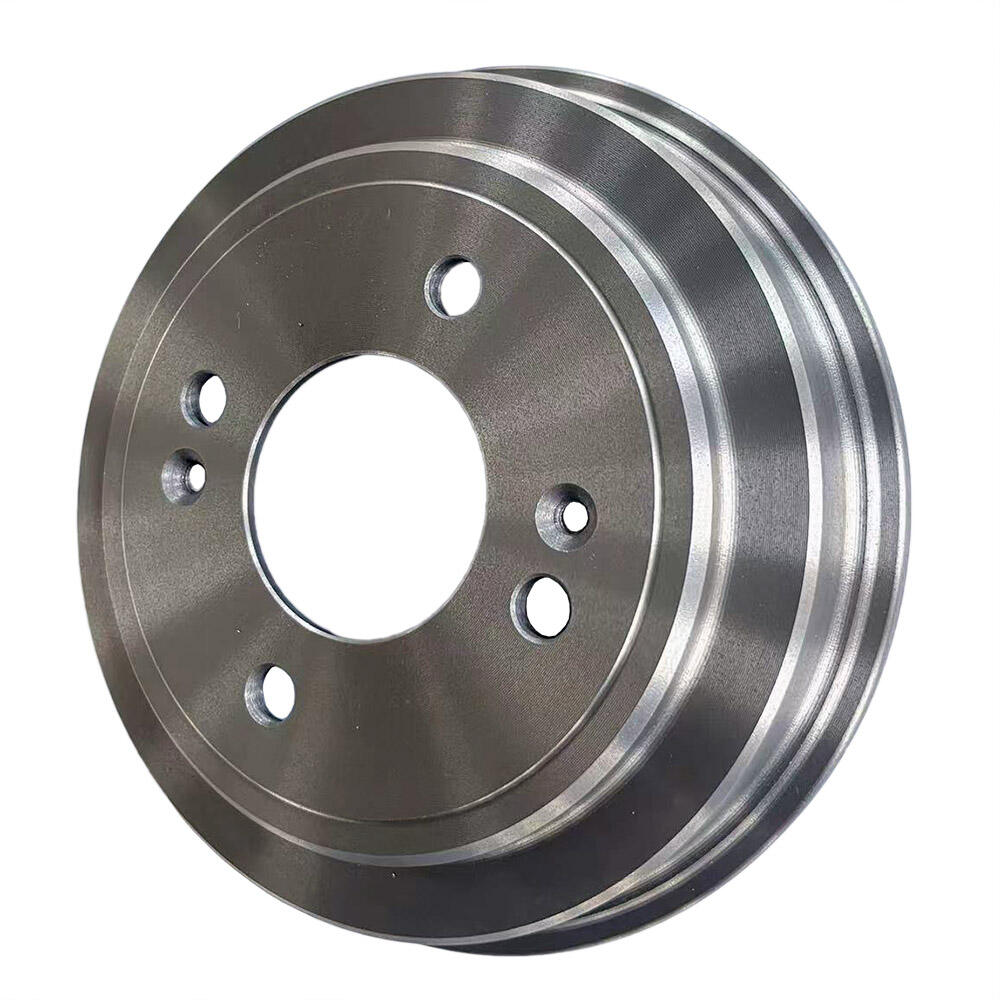
In the realm of automotive braking systems, the brake drum remains a fundamental component for many vehicles, particularly in rear-wheel or specific commercial applications. This robust, bell-shaped housing, typically crafted from high-grade cast iron or composite materials, functions as the rotating friction surface within a drum brake assembly. When the driver applies the brake pedal, hydraulic pressure forces the curved brake shoes outward against the drum's meticulously machined inner surface, converting kinetic energy into thermal energy through friction and thereby effectively decelerating the wheel. The design prioritizes durability and cost-effectiveness, offering substantial braking force suitable for certain load-bearing axles. However, consistent performance hinges on critical factors such as heat dissipation, material integrity, and maintenance. Prolonged or severe braking can cause brake drums to overheat, potentially leading to issues like thermal fading, distortion (becoming out-of-round), or the development of hard spots and scoring on the friction surface, which manifest as pulsations, noise, or uneven braking. Modern advancements include centrifugally cast drums for improved grain structure and alloys enhancing thermal conductivity to mitigate heat-related drawbacks. Regular inspection for wear limits, cracks, and surface irregularities is paramount for safety. Unlike disc brakes, drums are partially self-energizing, meaning the rotation can assist in applying the shoe force, but they are also prone to performance reduction when wet, though they generally recover quickly upon drying. The service life of a brake drum is intrinsically linked to driving habits, vehicle load, and the compatibility of the mating brake shoe lining material. Ultimately, understanding the operational principles, common failure modes like cracking or drum glazing, and proper maintenance intervals for the brake drum is essential for ensuring reliable vehicle stopping power, operational safety, and cost-efficient ownership, especially in contexts where this traditional yet evolved technology is deployed.