EN
EN
Quick Links
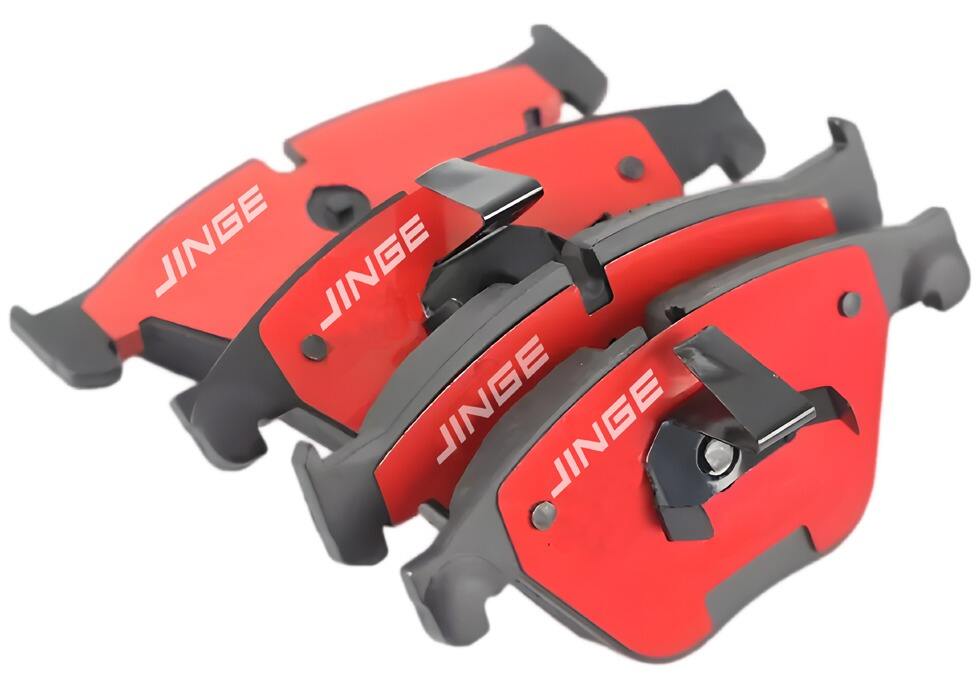
The global automotive brake pad industry is entering a decisive new era. Environmental regulations are no longer limited to exhaust emissions alone—attention has now firmly shifted toward non-exhaust particulate matter, particularly brake wear emissions. With upcoming standards such as Euro 7 setting stricter limits on particulate pollution, copper-free and low-dust brake pad formulations are rapidly becoming the new industry baseline rather than a niche alternative.
For distributors, wholesalers, and aftermarket brands, this shift represents both a challenge and a strategic opportunity. Traditional friction materials, especially copper, have long been valued for their thermal conductivity and braking stability. However, copper particles released during braking have been proven to contaminate air, soil, and water systems, driving regulators worldwide to restrict or ban its use. As a result, manufacturers must now deliver braking solutions that meet demanding environmental standards—without compromising safety, durability, or driving comfort.
Regulatory Pressure Is Accelerating Industry Transformation
From Europe to North America and beyond, environmental compliance is becoming a core requirement for market access. Euro 7 regulations, along with similar standards in the United States and Asia-Pacific markets, focus heavily on reducing particulate emissions generated by braking systems. These rules apply not only to vehicle manufacturers but also directly impact the aftermarket brake pad sector.
For B2B buyers, this means sourcing decisions can no longer be based solely on price or coverage. Product compliance, formulation transparency, and long-term regulatory readiness are now critical evaluation factors. Distributors who fail to adapt risk inventory obsolescence, reduced competitiveness, and missed opportunities in regulated markets.
Advanced Material Science Is the Key to Copper-Free Performance
Removing copper from brake pad formulations is not a simple substitution—it requires advanced material science, extensive testing, and deep application knowledge. Copper-free brake pads must still deliver consistent friction performance across temperature ranges, maintain stable braking feel, minimize noise and vibration, and reduce disc wear.
This is where experience and R&D capability make a measurable difference.
At Jinge Technology, copper-free development is not a recent response to regulation—it is the result of long-term strategic investment. With 22 years of deep OE market experience, the company has built a dedicated R&D center focused on friction material innovation, environmental compliance, and performance optimization.
By leveraging proprietary material formulations and precision manufacturing processes, Jinge Technology has successfully developed a comprehensive range of copper-free and low-dust brake pads that meet the latest global regulatory requirements while maintaining strong, reliable stopping power.
Proven Capability at Industrial Scale
In the B2B aftermarket, innovation must be matched by scale and consistency. Jinge Technology currently offers more than 2,100 brake pad part numbers, covering a wide range of passenger cars, commercial vehicles, and regional applications. With an annual production capacity of 20 million brake pad sets, the company is equipped to support high-volume distributors as well as growing regional brands.
Every stage of production—from raw material selection to formulation mixing, pressing, scorching, and final inspection—is tightly controlled to ensure batch-to-batch consistency. This manufacturing discipline is especially critical for copper-free products, where material balance directly affects braking stability and wear behavior.
For distributors, this translates into predictable quality, reduced claims, and stronger confidence when promoting environmentally compliant brake solutions to their customers.
Designed for the Global Aftermarket
Modern brake pad buyers are no longer focused solely on performance—they demand products that align with sustainability goals, regulatory compliance, and future market access. Jinge Technology’s copper-free brake pads are engineered with global markets in mind, supporting distributors who serve Europe, North America, the Middle East, and emerging regions preparing for stricter environmental standards.
Low-dust formulations help reduce visible brake dust on wheels, improving end-user satisfaction while also contributing to cleaner urban environments. At the same time, optimized friction coefficients and thermal stability ensure consistent braking performance under both daily driving and demanding conditions.
This balance of environmental responsibility and functional reliability is exactly what today’s professional buyers expect from a long-term manufacturing partner.
A Strategic Partner for the Copper-Free Transition
The transition to copper-free brake pads is no longer a future consideration—it is happening now. Distributors who act early can position themselves as forward-looking suppliers, offering compliant, high-performance products that meet the expectations of regulators, installers, and end users alike.
Jinge Technology works closely with its B2B partners to support this transition, offering:
- A broad, ready-to-market copper-free product portfolio
- Strong OE-based technical expertise
- Stable production capacity for long-term supply
- Flexible cooperation models for global distributors
Rather than reacting to regulation, the company helps partners stay ahead of it—protecting market access and building sustainable growth.
Is Your Supply Chain Ready for What’s Next?
As environmental standards continue to evolve, the brake pad industry will only become more demanding. Copper-free, low-dust, and regulation-ready products will define the competitive landscape of the coming decade.
Choosing the right manufacturing partner today can determine your position tomorrow.
Contact Jinge Technology to explore its compliant brake pad portfolio and discover how a future-ready supply chain can help you secure a lasting competitive edge in the global aftermarket.

Jinge Technology, established in 2002 in Shanghai. A top player in China\\\'s brake field. Annually manufactures 33M brake discs & 20M brake pad sets. Offers diverse brake components like pads, discs, calipers, shoes, and bearings. Serves 80+ countries, retains 800+ customers.
901,No1,998 Nong,Longshui North Road.Xuhui District Shanghai,China.
Copyright © 2024 by SHANGHAI JINGE TECHNOLOGY CO., LTD. Privacy Policy