EN
EN
Quick Links
The global shift toward electric and hybrid mobility is accelerating at an unprecedented pace. As Electric Vehicles (EVs) and Hybrid Electric Vehicles (HEVs) gain market share across passenger and commercial segments, they are fundamentally redefining expectations for core vehicle systems—especially braking. While electrification reduces tailpipe emissions, it also introduces new technical challenges that traditional brake systems were never designed to address.
One of the most significant changes comes from regenerative braking. In EVs and HEVs, regenerative systems recover kinetic energy during deceleration, reducing reliance on conventional friction brakes. While this improves energy efficiency, it also alters brake usage patterns, creating a new set of durability, performance, and reliability requirements for brake discs, pads, and calipers.
For manufacturers, distributors, and aftermarket suppliers, adapting to these changes is no longer optional. Specialized braking solutions engineered specifically for electric and hybrid vehicles are quickly becoming essential for long-term competitiveness.
Why Traditional Brake Systems Fall Short in EV and HEV Applications
In conventional internal combustion engine vehicles, friction brakes are engaged frequently, keeping discs and pads clean and evenly worn. In contrast, EVs and HEVs rely heavily on regenerative braking, meaning friction brakes are used less often but must perform flawlessly when called upon.
This operating profile introduces several critical challenges:
Corrosion from Disuse: Reduced brake engagement allows moisture and contaminants to accumulate on disc surfaces, accelerating corrosion and uneven wear.
Higher Instantaneous Load: When friction brakes are engaged, EVs—often heavier due to battery packs—place higher stress on braking components.
Noise and Comfort Sensitivity: EV drivers expect quieter operation, making noise, vibration, and harshness (NVH) control more critical than ever.
Low Wear but High Stability Demand: Brake components must resist corrosion and aging while delivering stable friction performance after long idle periods.
These factors make it clear that EVs and HEVs require brake systems engineered specifically for electrified platforms—not simply adapted versions of traditional designs.
Engineering Braking Solutions for the Electric Future
Meeting the unique demands of EV and HEV braking requires a combination of advanced material science, precision manufacturing, and real-world application insight. This is where experienced manufacturers with strong OE backgrounds gain a decisive advantage.
At Jinge Technology, electrification is not viewed as a challenge, but as a strategic opportunity. Backed by deep OE experience, the company has direct insight into how next-generation vehicles are engineered and how braking systems must evolve alongside them.
By closely monitoring global EV development trends and working from an original-equipment mindset, Jinge Technology develops dedicated brake components designed specifically for electric and hybrid applications.
Specialized Brake Discs Designed for EV/HEV Platforms
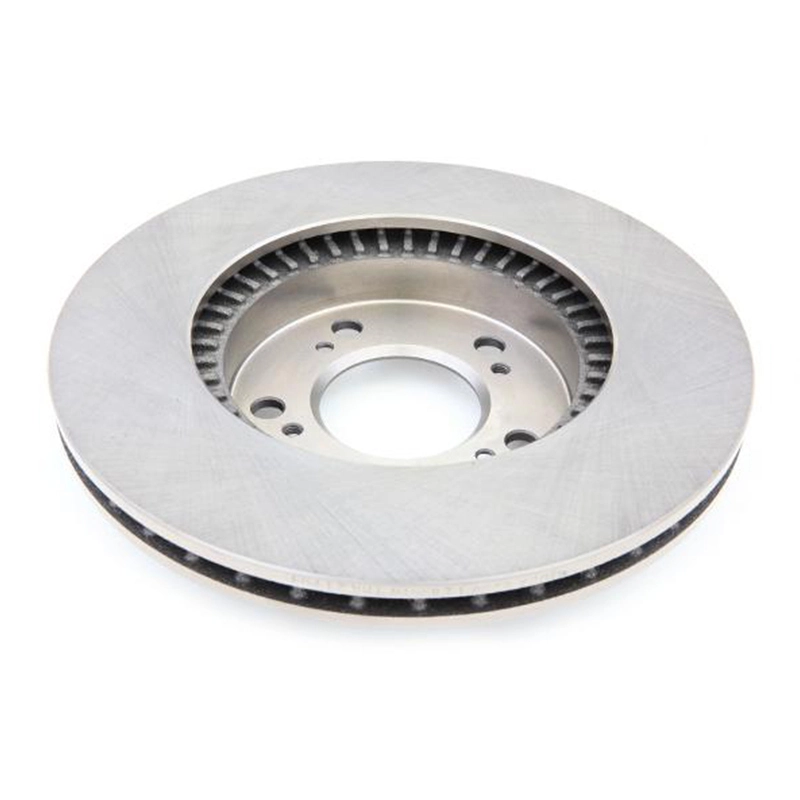
Brake discs for EVs and HEVs must prioritize corrosion resistance without compromising thermal stability or braking performance. To address this, Jinge Technology engineers brake discs with advanced surface coatings and optimized metallurgy.
These coatings help protect disc surfaces during extended periods of low usage, significantly reducing rust formation and surface degradation. At the same time, precision machining ensures uniform contact and stable braking response when friction braking is required.
The result is a brake disc that delivers long-term durability, consistent performance, and reduced maintenance—key benefits for both private EV owners and fleet operators.
Optimized Brake Pad Formulations for Electrified Driving
Brake pads in EV and HEV applications must perform reliably after long intervals of minimal use. This requires carefully balanced friction formulations that resist glazing, maintain stable coefficients of friction, and minimize noise during sudden engagement.
Jinge Technology develops brake pads with tailored formulations specifically optimized for regenerative braking environments. These pads are engineered to deliver smooth, predictable stopping power, even after extended periods of inactivity, while maintaining low wear rates and excellent disc compatibility.
By focusing on material stability and controlled friction behavior, these EV-specific brake pads help ensure driver confidence and long service life—two factors that are increasingly important in the electric mobility market.
Supporting the Global Aftermarket Transition to Electrification
As EV and HEV adoption accelerates, the aftermarket faces a growing need for reliable, model-specific braking solutions. Distributors and wholesalers must be prepared with products that meet the technical and durability expectations of electric vehicles, while also offering broad coverage and consistent supply.
With 99% model coverage and distribution presence in more than 80 countries, Jinge Technology is well-positioned to support this global transition. Its extensive product range allows aftermarket partners to confidently serve diverse regional markets as electrification expands beyond early adopters into mass-market segments.
For B2B customers, this means simplified sourcing, reduced inventory risk, and access to braking solutions aligned with the future of mobility.
Built for Durability, Performance, and Long-Term Value
Electric and hybrid vehicles represent a long-term shift in the automotive landscape. Brake systems designed for these platforms must deliver not only immediate performance but also durability over extended service intervals.
Jinge Technology’s EV-focused brake components are engineered with this long-term perspective in mind. Enhanced corrosion resistance, optimized wear characteristics, and stable friction performance help reduce warranty claims, improve customer satisfaction, and strengthen brand reputation for aftermarket partners.
By investing in specialized EV braking technology today, distributors can position themselves as forward-thinking suppliers ready to meet evolving customer demands.
Equip Your Inventory for the Electric Revolution
The electrification of transportation is reshaping every aspect of vehicle design—and braking systems are no exception. Traditional solutions are no longer sufficient to meet the unique operating conditions of EVs and HEVs.
Partnering with a manufacturer that understands these challenges is critical.
Jinge Technology’s dedicated line of brake discs, pads, and related components for electric and hybrid vehicles is engineered for durability, performance, and global applicability. From advanced coatings to optimized friction materials, every product is designed to support the next generation of mobility.
Connect with Jinge Technology today to learn more about its specialized EV and HEV brake solutions—and equip your supply chain for the electric future with confidence.

Jinge Technology, established in 2002 in Shanghai. A top player in China\\\'s brake field. Annually manufactures 33M brake discs & 20M brake pad sets. Offers diverse brake components like pads, discs, calipers, shoes, and bearings. Serves 80+ countries, retains 800+ customers.
901,No1,998 Nong,Longshui North Road.Xuhui District Shanghai,China.
Copyright © 2024 by SHANGHAI JINGE TECHNOLOGY CO., LTD. Privacy Policy