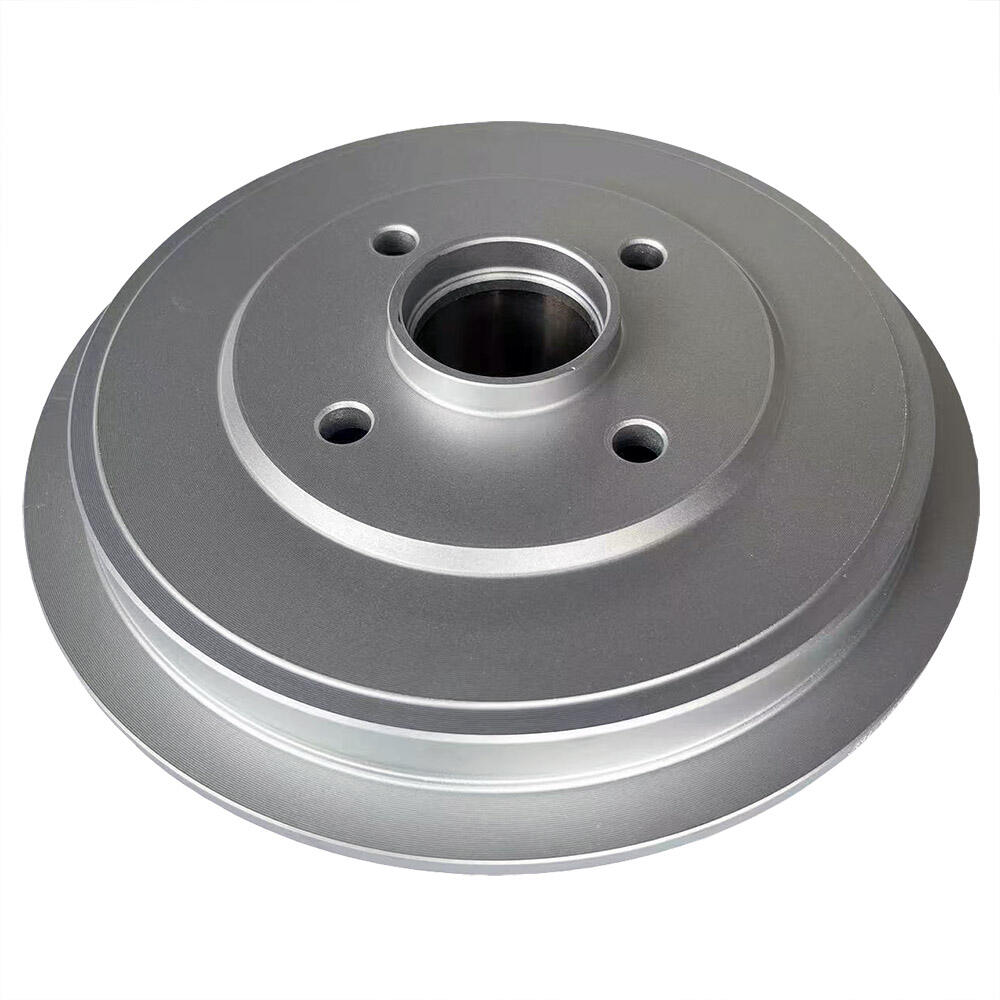

Within the ecosystem of automotive braking, the brake drum operates as a rotating chamber where controlled friction dictates deceleration. Its efficiency is a direct consequence of geometric integrity, material consistency, and thermal resilience. The casting process for drums is critical, aiming to produce a component free from voids or inclusions that could become failure initiation points under cyclic loading. During operation, the drum's ability to swiftly dissipate the generated heat into the surrounding air is vital; inadequate ventilation can lead to localized hotspots, glazing of the friction surface, and accelerated wear of both the drum and shoes. The contact mechanics between the concave shoe lining and the convex drum surface are complex, with pressure distribution varying along the shoe arc, influencing wear patterns and effectiveness. From a maintenance perspective, measuring the drum for wear, out-of-roundness, and taper is a non-negotiable procedure during brake service, as exceeding manufacturer-specified limits can result in poor brake feel, extended pedal travel, and reduced overall system integrity. The integration of the brake drum with the wheel hub and bearing assembly also demands precision to avoid runout, which translates into undesirable vibrations. In some modern iterations, sensors for wear detection may be incorporated. While the automotive industry sees a gradual shift towards disc brakes, the brake drum maintains significant relevance due to its cost efficiency, effective parking brake mechanism integration, and proven performance in specific vehicle segments like economy cars and heavy rear axles. Therefore, a nuanced discussion about the brake drum must address its manufacturing pedigree, its in-service behavior under thermal and mechanical loads, the precise metrics defining its end-of-life, and its contextual advantages within the ever-advancing landscape of vehicle braking technology and global market demands.