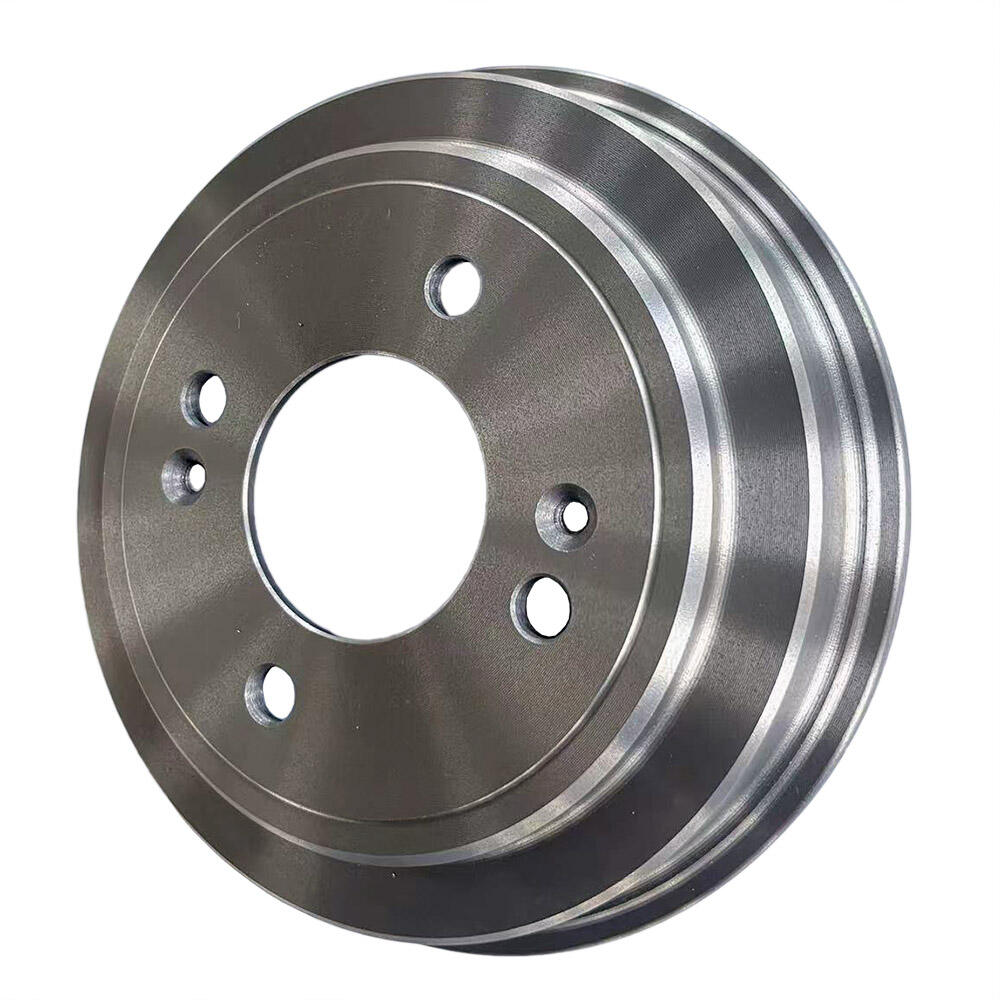

The brake drum stands as a testament to functional durability in automotive design, its performance inextricably linked to precision engineering and proactive upkeep. Acting as the rotating counterpart to the stationary brake shoes, its inner surface must maintain a specific micro-finish to ensure consistent friction coefficients without inducing undesirable vibrations or noise. The heat generated during braking poses the most significant challenge; if the brake drum cannot shed this heat rapidly, its temperature rises, potentially leading to reduced braking efficiency (fade), increased wear, and physical distortion. Advanced manufacturing techniques, including automated casting and computer-controlled machining, ensure tight tolerances on critical dimensions like inside diameter and runout. The drum's mass and moment of inertia also play a role in the vehicle's unsprung weight and rotational dynamics, factors considered in vehicle design. For the end-user, symptoms of a compromised brake drum often include a pulling sensation during braking, audible grinding or squealing, or a brake pedal that pulses under steady pressure. Corrective action involves disassembly, thorough cleaning, precise measurement, and either refinishing within strict limits or replacement with a unit that matches or exceeds OEM specifications for material and dimensions. The relationship between drum diameter and brake shoe curvature is exact; mismatches can lead to concentrated contact, rapid wear, and loss of braking power. In summary, mastering the topic of the brake drum involves a deep dive into its thermal management strategies, its manufacturing quality controls, the clear indicators of its wear and failure, and the exacting procedures necessary for its maintenance and replacement, all of which contribute to the reliable and safe deceleration of vehicles equipped with this robust and time-tested braking technology.