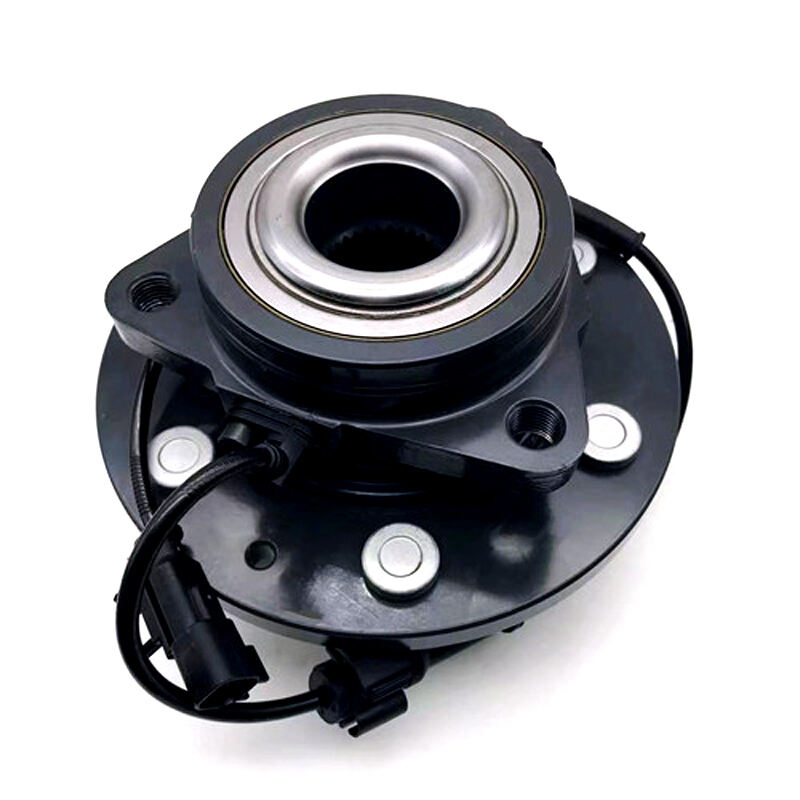

The engineering and material science behind a modern hub bearing are sophisticated, involving high-purity, case-hardened steel for the inner and outer races and high-quality spherical rolling elements, all manufactured to micron-level tolerances to ensure perfect load distribution and smooth operation, while the integral seals are crafted from advanced polymer compounds resistant to heat, ozone, and chemical degradation to protect the special high-temperature lithium-complex or synthetic grease that lubricates the assembly for its entire service life, typically sealed for life and non-serviceable. One of the most critical aspects of hub bearing performance is its preload, which is the internal tension set during manufacturing that eliminates axial and radial play; incorrect installation torque or the use of impact wrenches can alter this preload, leading to excessive heat generation, accelerated wear, and premature failure, making the use of a calibrated torque wrench and following the manufacturer's specific procedure—which may include a final torque-angle step—an absolute necessity for any installation to ensure longevity and performance. Environmental and usage factors dramatically affect hub bearing lifespan; vehicles frequently driven on rough roads, used for towing, or exposed to frequent water crossings (like in flood-prone areas) place added stress on the bearing and its seals, potentially shortening service intervals, whereas highway driving under consistent loads typically promotes longer bearing life, highlighting the need for vehicle-specific bearing selection that matches the intended duty cycle and operating conditions. In the global automotive aftermarket, providing a comprehensive range of hub bearing units that meet or exceed OE specifications for passenger cars, SUVs, and light commercial vehicles is essential, as is offering detailed technical documentation and installation guides to support technicians worldwide, ensuring that this safety-critical component is correctly fitted to maintain the vehicle's designed handling characteristics, noise levels, and, most importantly, the secure connection between the wheel and the vehicle, a universal requirement for safe mobility.