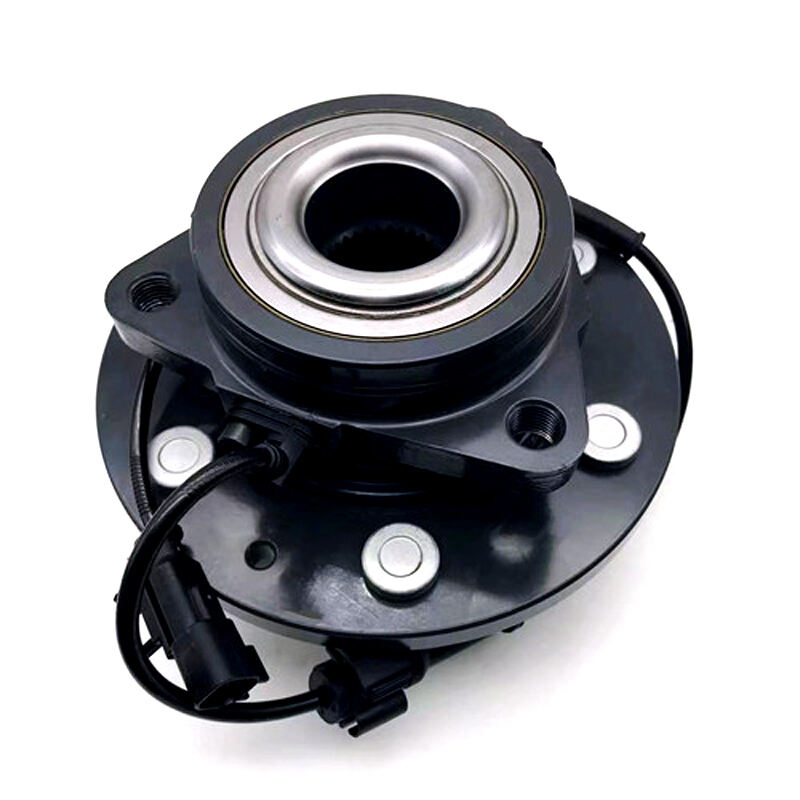
The wheel bearing is a fundamental automotive component that ensures seamless wheel rotation by mitigating friction between stationary and moving parts, thereby supporting the vehicle's load and facilitating precise steering response. Embedded within the wheel hub, this bearing assembly comprises hardened steel elements—such as balls or tapered rollers—encased in races, designed to endure constant stress from vehicle dynamics while maintaining minimal rotational drag. Degradation of wheel bearings typically arises from prolonged exposure to contaminants like road salt and water, inadequate lubrication, or excessive loads, manifesting early as subtle humming or growling sounds that escalate during turns or speed changes. Left unaddressed, wear progresses to cause palpable vibrations, steering wheel shimmy, and increased rolling resistance, which can adversely impact fuel economy and tire alignment. Professional assessment often involves lifting the vehicle to check for play in the wheel or using stethoscopes to isolate bearing noise, as accurate diagnosis is essential to differentiate bearing issues from similar symptoms caused by tire or brake problems. Contemporary automotive designs frequently employ sealed, pre-assembled hub bearing units that integrate critical functions, including mounting surfaces for brake discs and provisions for ABS wheel speed sensors, underscoring the bearing's integral role in modern braking and stability control systems. Choosing a replacement wheel bearing demands attention to specifications like load rating, sealing technology (e.g., triple-lip seals for enhanced protection), and material durability to ensure compatibility and longevity. Moreover, proper installation is paramount; incorrect torque application or mishandling can lead to premature failure, making it advisable to rely on certified technicians. The interconnected nature of wheel bearings with other components—like CV joints, hubs, and brakes—means that their optimal performance contributes directly to overall vehicular safety, reducing the risk of sudden breakdowns and maintaining consistent handling. Ultimately, investing in high-quality wheel bearings and routine inspections fosters reliable vehicle operation, emphasizing their critical function in achieving a balanced, secure, and efficient driving experience across diverse road conditions.