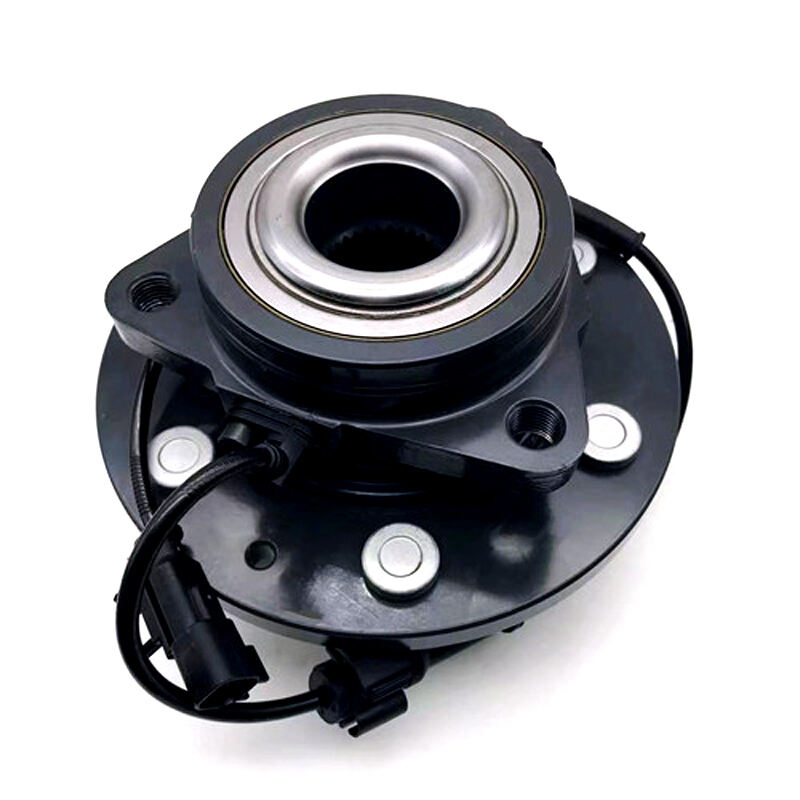
As a fundamental chassis component, the hub bearing's primary function is to facilitate the precise and free rotation of the wheel assembly, a task that requires exceptional mechanical integrity to handle the complex combination of forces it endures, including vertical loads from the vehicle's weight, lateral forces during turns, and thrust forces during braking and acceleration, all while maintaining minimal rolling resistance to contribute to overall vehicle efficiency and performance. The transition to Generation 3 and Generation 4 hub bearing units, which integrate the bearing directly with the steering knuckle or the CV joint, underscores the automotive industry's push towards modularity, weight reduction, and improved performance, offering benefits like enhanced stiffness for better handling, more accurate ABS wheel speed signal generation, and simplified assembly line processes, though this integration means replacement often requires swapping the entire hub assembly, impacting service complexity and parts cost. Diagnosing a failing hub bearing requires a systematic approach; besides listening for characteristic road-speed-dependent noises, technicians may perform a grab test by lifting the vehicle and checking for wheel wobble, or use a diagnostic stethoscope to isolate the source of the sound, as distinguishing bearing noise from similar symptoms caused by unbalanced tires or worn CV joints is crucial for accurate repair and customer satisfaction. For global distributors, fleet managers, and safety-conscious vehicle owners, understanding the critical signs of hub bearing wear and adhering to recommended inspection intervals are key components of preventive maintenance, as a timely replacement not only restores quiet operation and smooth handling but also safeguards the integrity of the entire wheel end system, preventing collateral damage to brakes, axles, and tires, thereby underscoring the hub bearing's role as a silent yet vital guardian of vehicular safety and operational reliability in every driving environment.