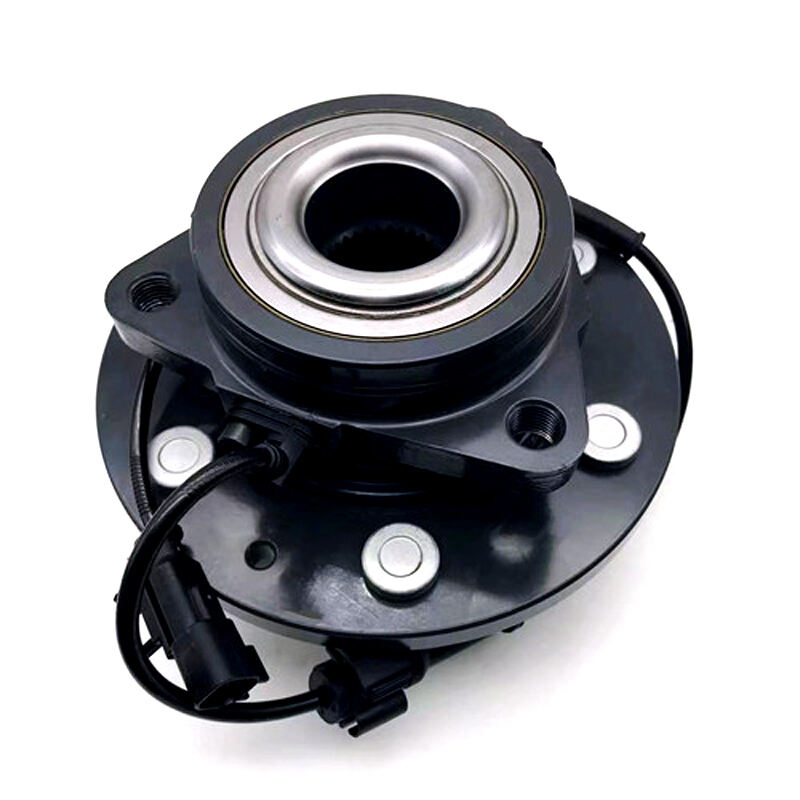
Wheel bearings are indispensable for maintaining vehicle control and safety, functioning as precision components that minimize rotational resistance between the wheel hub and axle. These bearings enable wheels to rotate freely while bearing substantial loads from the vehicle's weight and dynamic forces encountered during driving, such as those from cornering, acceleration, and braking. Typically composed of high-strength steel balls or rollers held within robust inner and outer races, wheel bearings are engineered to withstand extreme conditions but gradually degrade due to factors like moisture ingress, loss of lubrication, or impact damage from road hazards. Symptoms of a failing wheel bearing include persistent roaring or clicking noises that intensify with speed, uneven tire wear, and a noticeable looseness in the wheel when manually checked. To prevent catastrophic failure—which could lead to wheel seizure or detachment—it is critical to adhere to scheduled maintenance intervals and use diagnostic techniques like audio analysis or measuring axial play. Advancements in bearing technology have led to the widespread adoption of integrated hub bearing units, which combine the bearing, wheel hub, and often ABS sensors into a single, pre-lubricated assembly, simplifying service but necessitating precise installation torque to avoid damage. When replacing wheel bearings, selecting units that match OEM standards for load capacity, sealing effectiveness (to keep out dirt and water), and thermal tolerance ensures reliable performance under diverse driving environments. Furthermore, the wheel bearing's condition directly affects adjacent systems; for instance, a worn bearing can cause irregular brake disc contact or interfere with ABS sensor signals, compromising braking responsiveness. Thus, a holistic approach to vehicle upkeep should consider the wheel bearing as a key element in preserving not only smooth rotation but also the integrity of the braking and suspension systems. By prioritizing quality components and expert installation, drivers can achieve enhanced driving stability, reduced noise, and prolonged service life for their vehicles, reinforcing the wheel bearing's role as a cornerstone of automotive safety and efficiency.